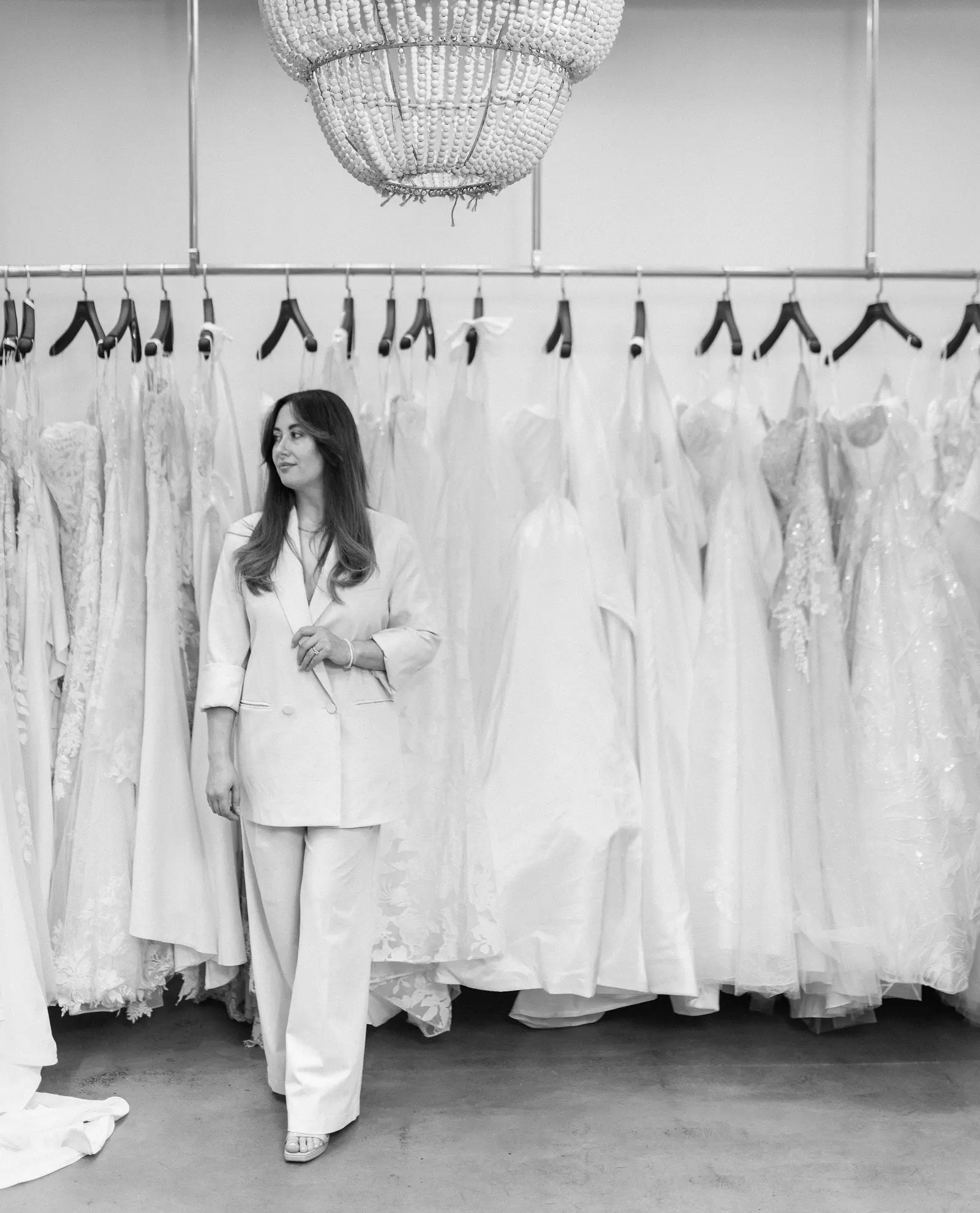
The team at Cande Bridal Boutique in Kelowna, British Columbia, on the shop floor
Our story

We ran a bridal store together for six years. Then we got tired of the software.

RingUps is built by Diana Rude and Adriana Garcia, who ran Cande Bridal Boutique in Kelowna, British Columbia together for six years before writing a line of code. Diana builds the product and the platform. Adriana owns the store and leads sales. Cande Bridal is our first production customer, and we say so on every page that uses its data.

Book a fifteen-minute demo on your own data
6 yrs
running a bridal store together before writing a line of code
2
founders, both of whom answer support
2,902
brides migrated onto RingUps in production
0
outside investors telling us to raise the price

Why two bridal store owners ended up writing their own software

Diana Rude and Adriana Garcia built RingUps after years of running Cande Bridal Boutique on tools that weren't made for bridal. Bridal Web Solutions still looks the way it did in 2005. BridalLive kept going down, and locked their data in when they tried to leave.

Special orders, alterations and deposits aren't edge cases in a bridal store. They're the whole business. Most retail software treats them as an afterthought bolted onto a general point of sale, which is why every boutique ends up with a spreadsheet beside the software and one person who knows what's really happening.

We built RingUps the other way around: starting from the deadline engine and the alterations workroom, because that's where a bridal store lives or dies. Everything else — point of sale, appointments, client records, reporting — was built to serve those two.

The 28-day alterations rule the deadline engine works backward from is Adriana's, not a default someone picked. She has run the fittings. She knows what happens to a bride when a gown arrives four weeks before a wedding instead of eight.

Cande Bridal is our first production customer, transparently. It's the store we still run, and the reason we know this problem from the inside rather than from a sales deck.

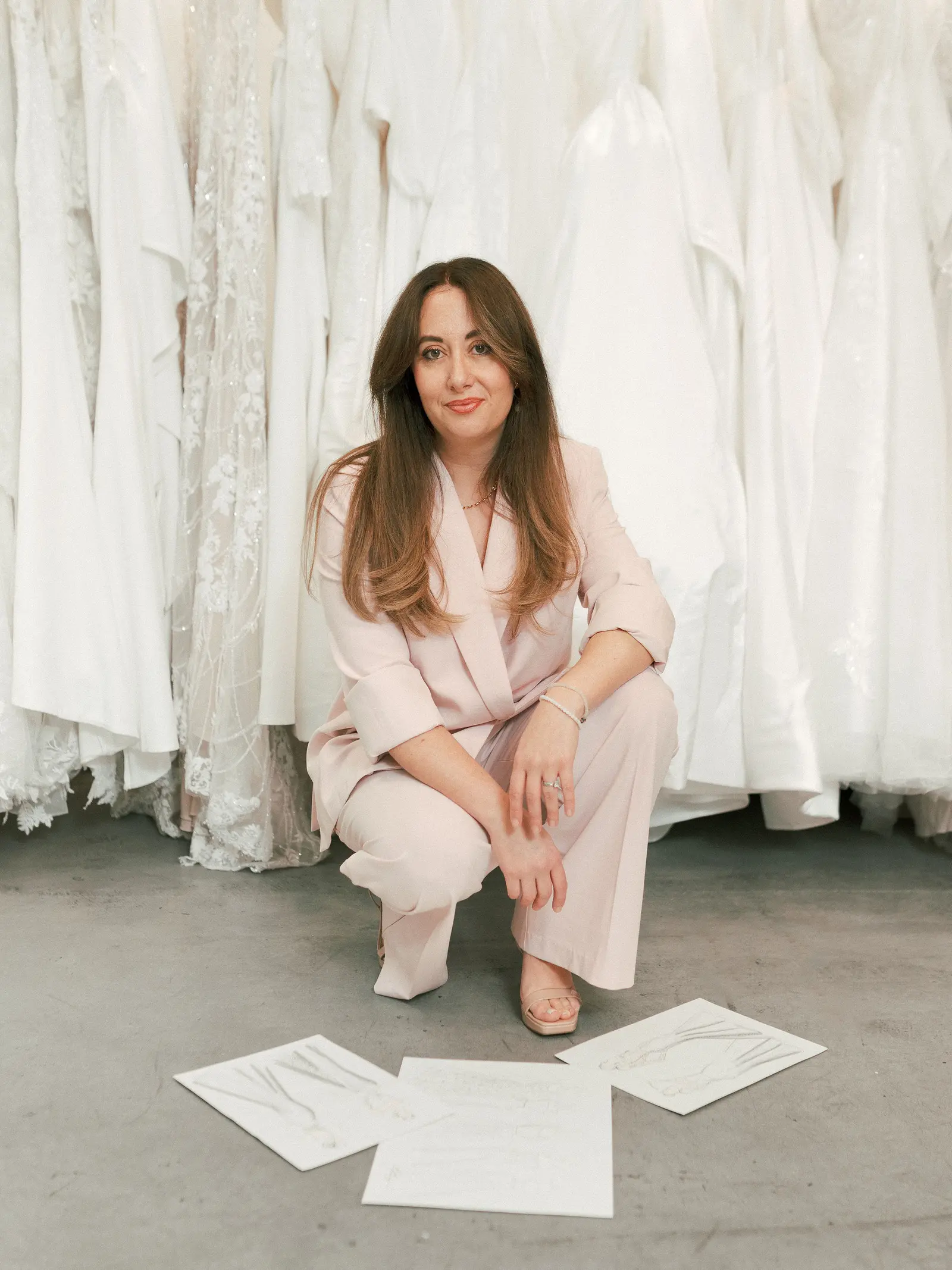
Adriana Garcia going through gown design sketches at Cande Bridal Boutique
Adriana Garcia with the season's sketches. The people who decide what RingUps does next are the people who work this floor.

Who builds RingUps

Two people. Their names are below, spelled out, because you should know exactly who you are buying software from and who picks up the phone when it breaks.

DR

Diana Rude

Co-founder — product, technology and platform

Diana Rude ran the floor and the workroom at Cande Bridal Boutique for six seasons. She now writes the software, runs the platform and does the migrations herself, which is why the reconciliation findings further down this page exist at all: somebody had to read 1,391 orders line by line.

If you email support about a gown that is going to be late, Diana is one of two people who can answer.

AG

Adriana Garcia

Co-founder — sales and industry relationships

Adriana Garcia owns Cande Bridal Boutique in Kelowna, British Columbia. She leads sales and the relationships with designers, suppliers and other store owners, and she wrote the 28-day alterations rule the deadline engine runs on.

She is also the most demanding user RingUps has. Her store depends on it every Saturday, which is a harder test than any feature request.

Adriana Garcia standing under the chandelier on the shop floor at Cande Bridal Boutique
How we build

The product is built behind the counter of a working store

RingUps was not designed in a workshop and then sold into bridal. It was written in the back of Cande Bridal Boutique, between appointments, by the two people who had to use it the next morning.

Adriana works the floor. She is in RingUps every day the store is open, on the busiest day of the week, with real brides waiting. When something in it is wrong on Saturday, it is usually different by the following week. There is no roadmap committee between the person with the problem and the person who fixes it, because there are only two of us and one of us is the person with the problem.

The honest cost of that: our priorities are biased by one store. A second and a third store will change them, and we would rather tell you that than pretend the roadmap is neutral.

A vendor ships what a committee agreed to. We ship what Saturday demanded.

How we operate

Three commitments we've written down so you can hold us to them

Each one has a version that is easy to say and a version that costs something. The second version is the one below.

01

We publish the price

Every plan and every limit is on the pricing page, in public, with no form in front of it. You should never have to sit through a discovery call to find out what a piece of software costs, and you should never wonder whether the store down the road is paying less than you for the same thing.

Hold us to this

If the number on your invoice ever differs from the number on the pricing page, that is our error and we will fix it in your favour.

02

We make leaving easy

Month to month, with a full export of your data on request. We know precisely what lock-in feels like, because when we moved Cande Bridal off its old system the contract bodies, the message template bodies, the scheduled message rules, the supplier lead times, the size charts and the per-bride notes had nothing behind them to export. They had to be copied out by hand from a live session before the subscription lapsed. That is the specific thing we will not do to you.

Hold us to this

Ask for your export before you sign, not after. If we cannot produce one in the demo, do not buy it.

03

We answer on Saturdays

Saturday is the day that matters in bridal. It is also the day most software companies are closed. Support is the two founders, including weekends, for as long as we can possibly keep that true. When you write in about a gown that is going to be late, you are writing to someone who has made that phone call to a bride herself, which is the whole difference between a support ticket and a conversation.

Hold us to this

It is a promise from two people, so it has a ceiling. The day we cannot keep it, we will change this paragraph rather than quietly stop answering.

Proof

What we did with the first migration, including the parts that were not clean

The most useful thing we can show you about how we work is what happened when we moved a real store's twenty years of history onto RingUps. Every figure below was verified against the production database.

The first production migration onto RingUps: Cande Bridal Boutique, verified against the production database on 4 August 2026.
What movedFigure
Bride records migrated2,902
Appointments migrated3,820
Historical orders migrated1,391 / $2,275,597.72
Payments migrated, net of 43 refunds2,341 / $2,161,190.44
Gown styles catalogued625
Gown photographs rehosted427
Per-unit floor inventory imported500
Suppliers / divisions23 / 49
Orders skipped rather than invent a bride228

The restraint is the part worth reading

Going through the old data line by line, 93 lines across 59 orders turned out to have been recorded with both a negative quantity and a negative price, so they read as money owed. That is $141,807.75 of wrong-signed history — roughly 78% of an apparent $384,659.89 receivable was an artefact of how the records were kept.

We found it, we refused to guess at it, and we told the owner not to collect on it. A further 228 orders and 2,759 payments were left out of the import entirely rather than attach them to a bride we could not identify. Skipping a row is worse for the migration statistics and better for the store.

If you want to test any vendor, including us: ask an owner to reconcile their current system against itself.

And the parts that were not clean

The import was not pristine, and we are not going to tell you it was. All 1,391 orders arrived carrying no tax at all and had it rebuilt. Then 36 exception invoices were corrected against a second report, which caught a $3,253.05 overstatement. Every imported order landed with the status "picked up" and had to be read that way afterwards.

Every row is idempotent and reversible by batch, which is the only reason any of that was survivable. It is a story about migration competence, not about data arriving clean.

Cande Bridal has been trading since, so today's totals are higher than the migration figures above. We never present a current total as a migration figure, in either direction. The full case study is here.

Mission

Give every independent bridal boutique the operating system a national chain would build for itself.

A store with four staff shouldn't have worse tools than a group with forty. The work is the same; only the budget is different, and software is the one place that gap can be closed.

Vision

A network where boutiques trade inventory, not just software they each use alone.

Your dead stock is another store's bestseller. Once enough boutiques are on one system, that becomes a marketplace no incumbent can copy by writing code. It is a capability today, not a populated network, and we describe it that way.

Built inside a working boutique

A product built inside a working boutique, a price published in public, a migration you can audit line by line, and an export that works.

See where competitors genuinely win → Security and certification status →

Questions people ask before they trust us

Who owns RingUps?

RingUps is owned by its two founders, Diana Rude and Adriana Garcia. There are no outside investors and no venture funding. Diana Rude builds the product, the technology and the platform. Adriana Garcia owns Cande Bridal Boutique in Kelowna, British Columbia, and leads sales and industry relationships.

Is RingUps a real company or a side project?

RingUps is a real product running a real store. Cande Bridal Boutique in Kelowna, British Columbia runs its whole business on it, including 1,391 historical orders and 2,341 payments migrated off its previous system. It is also small and young: two founders, no outside investors, and the corporate and payment-processing setup that would let us process cards on behalf of other stores is still in progress.

How many people work on RingUps?

Two. Diana Rude writes the software and runs the platform. Adriana Garcia runs Cande Bridal Boutique and leads sales and industry relationships. Both of them answer support, and neither of them is full-time on RingUps yet. That is a real limit, and it is the reason we would rather finish one domain properly than start eleven.

Is Cande Bridal Boutique a customer or the founders' own store?

Both, and we disclose it everywhere its data appears. Adriana Garcia owns Cande Bridal Boutique in Kelowna, British Columbia. It is the first production customer of RingUps and the store the software was built inside, which is why the figures on this site carry the store's name rather than appearing as an anonymous case study.

Talk to the people who built it

Not a sales team reading from a script — the two people whose store this software runs.

Book a fifteen-minute demo on your own data Read the Cande story