Designers, divisions & lead times

Every designer, every division, a deadline you can trust

RingUps holds every designer a bridal store buys from as a supplier record with its own divisions, its standard and rush lead times, and the days that designer adds before a gown reaches you. Those lead times feed the deadline engine, which computes each gown's must-arrive-by date backward from the wedding date. 23 suppliers carrying 49 divisions came across in the Cande Bridal Boutique migration.

suppliers migrated
23
divisions behind them
49
of 625 products matched to a supplier
624
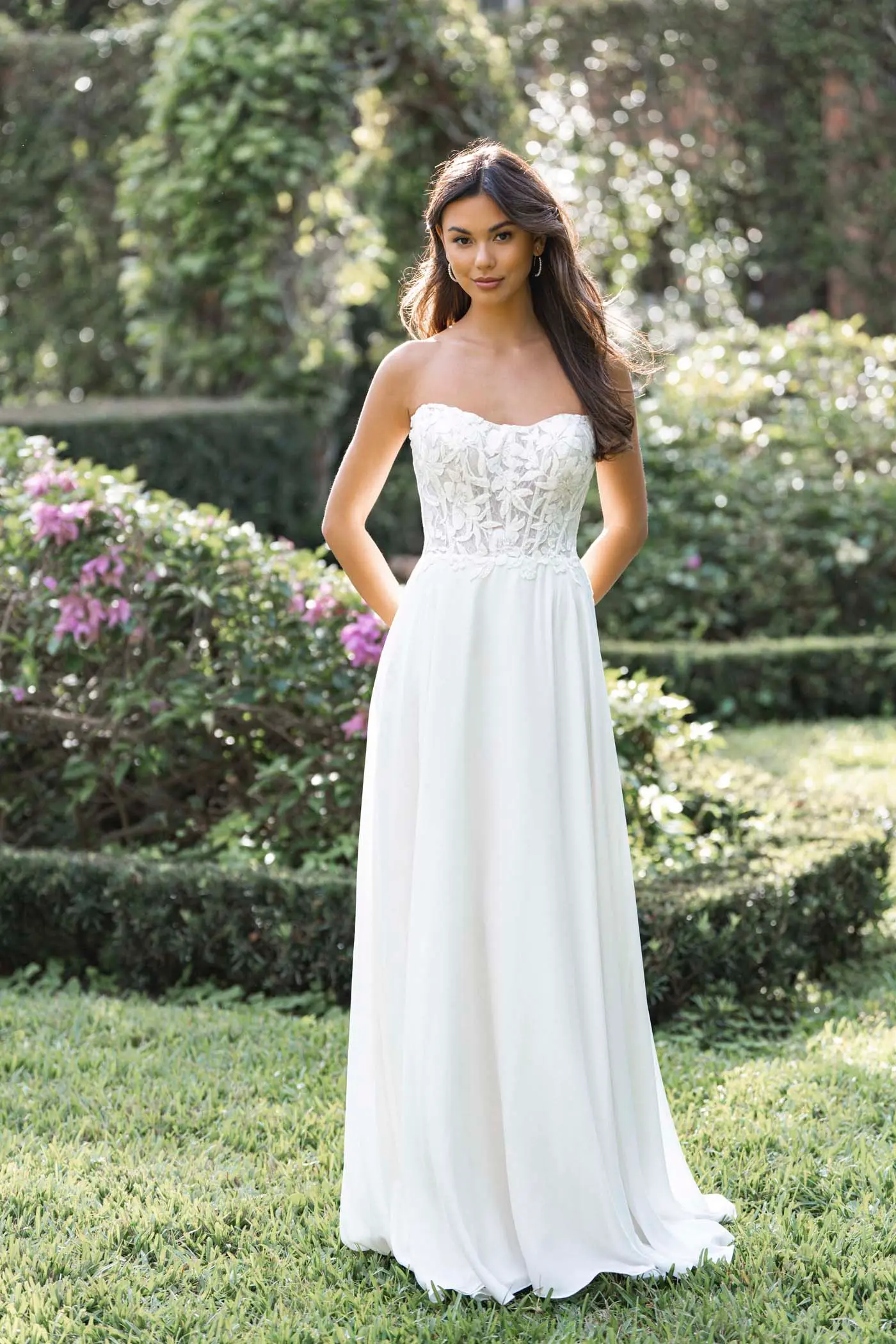
Bride in a strapless Romance gown with a floral lace bodice and a soft A-line skirt, standing in a garden
Romance, style R3853 · Cande Bridal Boutique, Kelowna, British Columbia
The word nobody outside bridal knows

What is a designer division, and why does one supplier record not fit?

A designer house rarely sells one thing. It sells a main collection, a romantic line, a couture line, sometimes a plus range and a bridesmaid range, each under its own label. Those labels are divisions. They can carry different lead times, different price points and different size charts, and they can be cut in different factories.

This matters because the lead time is the number the whole special-order calendar hangs on. Software that models a supplier as one flat record has to pick a single lead time for the house, which makes it right for one label and wrong for the rest. Cande Bridal Boutique buys from 23 suppliers carrying 49 divisions between them, so more than half of those labels would be quoted against somebody else's production schedule.

Supplier
The house you have an account with, and the people you call when a gown is late. Terms, contacts and the account number sit here.
Division
A label that house sells under. A style belongs to a division, and the division is what tells you how long that particular gown takes to make.
Lead time
Standard and rush, held per supplier, plus the days that designer adds after they confirm a ship date. The deadline engine reads all three.
Size chart
Held per designer where one exists. 17 charts across 12 designers today, so a size suggestion appears on some gowns and not on others, and RingUps says which.
app.ringups.com/suppliers
Designer house, three divisions
One account · one contact · three production schedules
Main collection14 weeks standard
Rush 9 weeks · size chart on file
Romantic line20 weeks standard
No rush option · size chart on file
Couture line26 weeks standard
No rush option · no size chart yet
Twelve weeks separate the fastest label from the slowest. In a flat supplier record that difference has to be remembered by a person at the counter, in front of a bride.
Illustration of the supplier screen. The house, the division names and the lead times are sample data.
The same wedding, the same house, three divisions. Worked backward from a Saturday wedding on 10 October 2026, with a 28-day alterations window and a two-week shipping allowance. Illustrative lead times.
DivisionStandard lead timeLast safe day to place the order
Main collection14 weeks23 May 2026
Romantic line20 weeks11 Apr 2026
Couture line26 weeks28 Feb 2026

Three months separate the first row from the last, for one wedding date and one designer. That is the arithmetic a division exists to carry, and it is why RingUps records the label rather than only the house.

The problem

Why does nobody in the store agree on how long a gown takes?

Because the number lives in three places and none of them is the software. It is in the owner's head, it is in a printed designer terms sheet in a binder behind the till, and it is in whatever a consultant remembers about the last time that label was late. The system holds a field, the field was filled in once in 2014, and everybody quietly stopped trusting it.

This is not a hypothetical about a shallow product. Bridal Web Solutions is a deep system dating to 2006, with about 85 reports and 156 pages across 11 subsystems. Depth was never the issue. Configuration was, and the evidence is in its own screens.

Bridal Web Solutions itself flagged 14 of Cande Bridal Boutique's 22 primary suppliers as never fully set up, and 82 categories hidden.

Reconciliation finding, Cande Bridal Boutique, verified 4 August 2026

Depth you never finish configuring is not capability. A supplier that is two thirds set up produces a lead time nobody will stand behind, and a lead time nobody stands behind gets replaced by a guess at the counter. Before you compare systems, ask an owner to open their supplier list and count how many rows are actually finished.

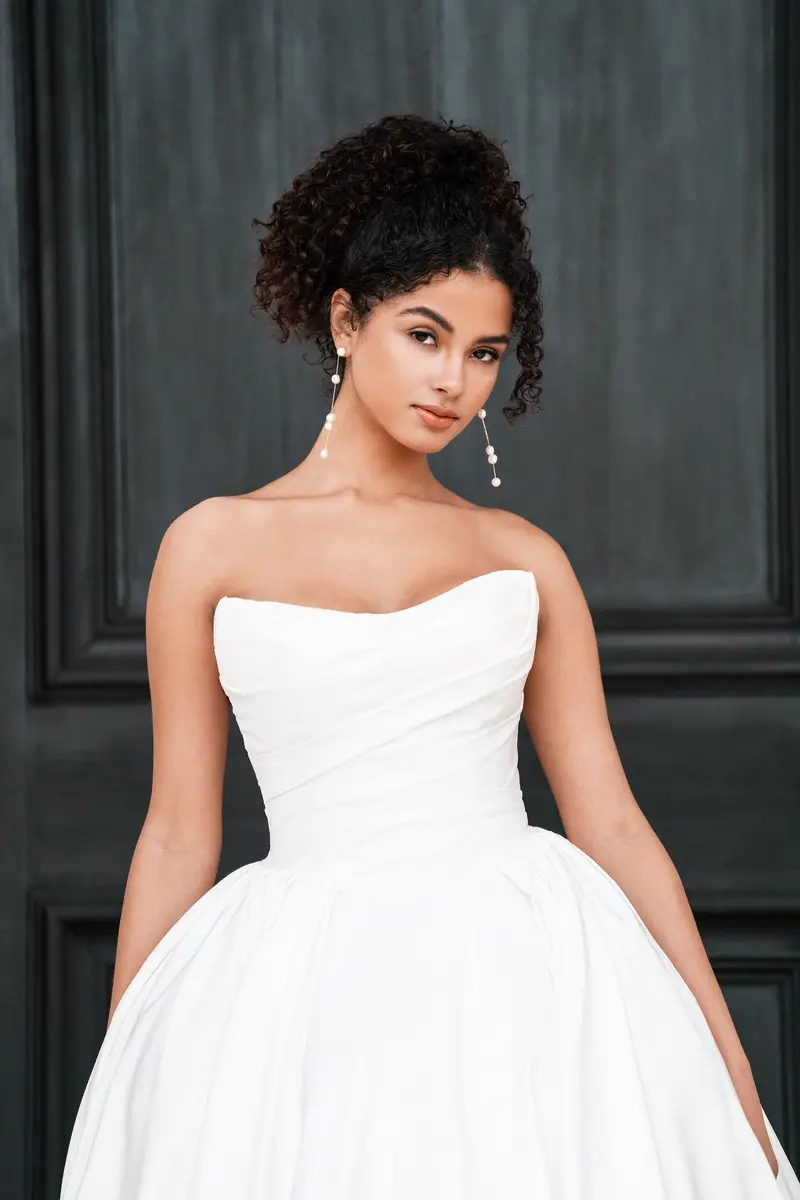
Bride in a strapless Allure gown with a draped, ruched bodice and a full skirt, against a dark panelled wall
Allure, style A1359A style belongs to a division, not to a house
Rolls of tulle, satin and textured bridal fabric stacked on a shelf at Cande Bridal Boutique
Dye lotsRecorded on the purchase order at placement

What a dye lot is, and why it belongs on the purchase order

Ivory is not one colour. A bolt of fabric is dyed in a batch, and two batches of the same named ivory can sit a shade apart. On one gown nobody notices. On a bride and four bridesmaids photographed in daylight, everybody does, and the gowns are already paid for.

So the dye lot goes on the purchase order at placement, and RingUps checks it at the write path rather than in a warning message somebody can scroll past. If the lot on the order does not agree with the lot already recorded for that party, placement is blocked. A staff member can override it deliberately, and the override is a decision somebody made rather than a field that was skipped.

How it works

How does a designer lead time turn into a date on a purchase order?

Four steps. A person does the first and the last. RingUps does the arithmetic in the middle, every time, in the same way, whether it is a Tuesday morning or the Saturday before a long weekend.

  1. 01

    The supplier is set up once

    Divisions, standard lead time, rush lead time, terms and contact. In the Cande Bridal Boutique migration this was 23 suppliers carrying 49 divisions, brought across with their lead times rather than retyped from memory.

  2. 02

    Styles attach to the right label

    624 of 625 products matched to a supplier record. The single miss was a row called Credit, which is a bookkeeping line rather than a gown. A style that knows its division inherits that division's lead time.

  3. 03

    The deadline engine works backward

    From the wedding date, minus the alterations window, minus the shipping allowance, minus the supplier's lead time. That gives the must-arrive-by date and the last safe day to place the order, before anyone has promised anything.

  4. 04

    You place it and send it yourself

    Placement records the purchase order, the dye lot and the clock. It prints, and you send it by whatever channel that designer accepts.

app.ringups.com/purchase-orders
Purchase order, romantic line
One placement · one purchase order · one line
Ready to print
Style R3853 strapless A-linesize 8ivory, lot IV-4
Wedding date10 Oct 2026
Alterations window reserved28 days
Must arrive in store by12 Sep 2026
The dye lot was checked against the rest of this party before placement was allowed. The document prints. Nothing was sent to the designer, because RingUps does not have a channel into their systems.
Illustration of the purchase order screen. The style number is from the Cande Bridal Boutique catalogue; the dates, size and lot are sample data.
Lock-in

Your supplier lead times are the part of your system you cannot get back

Every store knows its brides and its orders are data. Nobody thinks of the supplier setup that way, because it was typed in once, years ago, a few minutes at a time, by several different people. It is the most expensive thing in the system to rebuild and the least likely thing to be backed up.

Bridal Web Solutions has exports. Forty-seven files of them, including a per-unit inventory export, and anyone who tells you otherwise has not looked. What it does not have is an API, a configuration export, or exports that agree with each other. Supplier lead times, size charts, contract bodies, email and message template bodies, scheduled message rules, booking-builder configuration and per-bride notes have no export behind them at all. They die with the subscription.

For Cande Bridal Boutique they were captured by hand, from a live session, screen by screen, because there was no other way to get them out. That is not a complaint about a competitor. It is the thing to check before you sign anywhere, including here: ask what happens to the configuration you are about to spend a year building, on the day you stop paying.

What came out of Bridal Web Solutions, and how
ConfigurationHow it was recovered
Supplier lead timesBy hand, from a live session
Size chartsBy hand, from a live session
Contract and template bodiesBy hand, from a live session
Products, orders, payments, inventoryExport files, then reconciled

Cande Bridal Boutique migration, verified 4 August 2026. 14 of 22 primary suppliers were flagged by Bridal Web Solutions itself as never fully set up, and 82 categories hidden.
Proof

What the supplier side of one real migration looked like

These are figures from the Cande Bridal Boutique migration, verified against the production database on 4 August 2026 rather than remembered. The store has been trading since, so its live totals are larger, and a current total should never be quoted as a migration figure.

The row worth arguing about is the last one. Size-chart coverage is partial, it is stated on the page rather than in a footnote, and it is the difference between a system that suggests a size where it can and a system that suggests one everywhere and is sometimes wrong.

Suppliers and designers, Cande Bridal Boutique, verified 4 August 2026
MeasureFigure
Suppliers migrated23
Divisions across those suppliers49
Products matched to a supplier record624 of 625
Gown styles catalogued625
Size charts on file17 across 12 designers
Designers with no size chart at all8 of 20

Questions boutique owners ask about designers and purchase orders

What is a designer division in bridal software?

One designer house often sells under several labels, and each label can carry a different lead time, a different price point and a different size chart. Those labels are divisions. Cande Bridal Boutique buys from 23 suppliers carrying 49 divisions between them, which is more than two labels per house on average. Software that models a supplier as one flat record cannot represent that, so the lead time it quotes is right for one label and wrong for the rest.

Where do supplier lead times live, and can I get them out of my current system?

In RingUps they live on the supplier record and feed the deadline engine directly. In Bridal Web Solutions they were a different matter. Supplier lead times, size charts, contract bodies, email template bodies, scheduled message rules, booking-builder configuration and per-bride notes have no export behind them, so they die with the subscription. For Cande Bridal Boutique they were captured by hand from a live session, because there was no other way to get them out.

Where to go next

Book a fifteen-minute demo on your own data

Bring your designer list and one real wedding date. We will set up your suppliers and their divisions on the call and work the deadline backward in front of you.

Book a demo See every module