Rolling out — waitlist open

The sample that has stopped selling in your store is a gown another store's bride has never seen

The RingUps marketplace lets one bridal store list a retired sample and another bridal store find it and enquire. Every listing carries a five-tier condition rating, a written flaw note and at least four photographs before another store can see it. It is discovery and enquiry only: no checkout, no payment, no escrow. It is opening by waitlist.

photographs before another store sees a listing
4
condition tiers, one of them required
5
eligible styles listed so far, which is why this is a waitlist
0
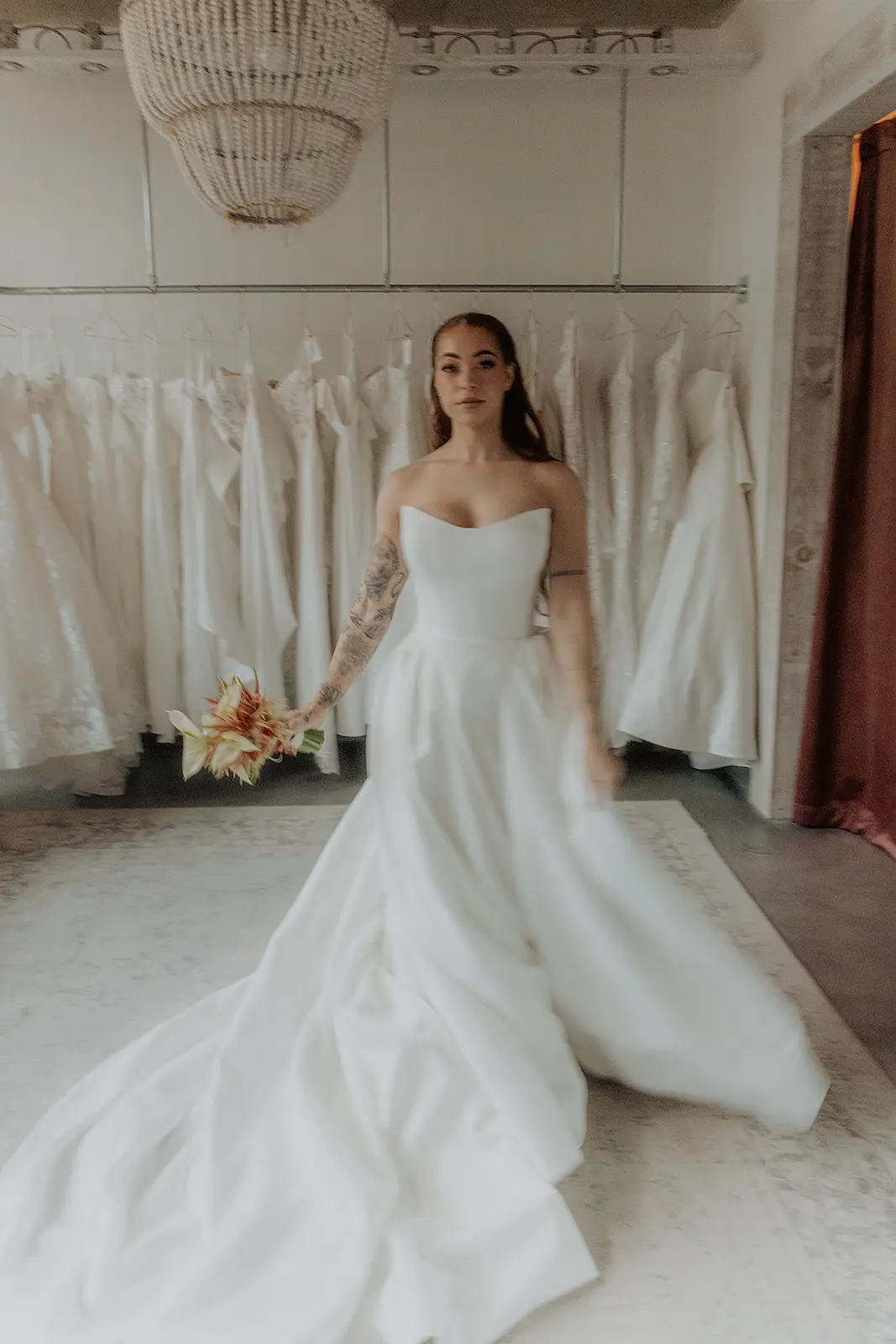
Bride in a strapless Private Collection ballgown with a plain skirt and a long train, standing by the gown rail under the beaded chandelier at Cande Bridal Boutique
Private Collection, house label · Cande Bridal Boutique, Kelowna, British Columbia
The reason this exists

Why is a discontinued sample the most expensive thing on the rail?

A sample earns its keep by being tried on. Then it stops. The designer discontinues the style, the season turns, or every bride in the area who wanted that silhouette has already bought one. From that day the gown is two costs at once, and only one of them is obvious.

The obvious cost is the money. The store paid the designer for that dress and has not got it back. It sits on the balance sheet as stock and behaves like a loan the store made to itself. The second cost is the rail. A bridal store has a fixed number of hangers a consultant can walk a bride past in ninety minutes, and every one occupied by a gown nobody is asking for is a hanger unavailable to a gown they are. That cost never appears in a report, and it is usually the larger of the two.

The usual remedy is a clearance rail. It recovers some of the money, and it spends the thing the store was short of in the first place, which is floor space and consultant time. It also puts a discounted version of your own inventory in front of the brides you are trying to sell full price to.

A sample is not worn out. It is worn out in one town.

That is the whole economic case. The gown has exhausted its audience, not its usefulness. Every bride within driving distance has seen it on the rail or in your photographs, and none of them chose it. Move it four hours away and it is a gown nobody has seen, in a size some other store has been asked for and cannot fill, from a designer that store may not carry at wholesale minimums. Dead stock in one store is a gap in another store's floor. RingUps is the place the two can find each other.
Built, and not built

What part of the marketplace actually exists?

The listing side. A store can flag a style as marketplace-eligible, set a separate store-to-store price, rate the condition, write the flaw disclosure, attach the photographs, and have another store find it and write to them. That is shipped, in the database, in migrations 0106, 0110 and 0112.

The money side is not. Taking a payment between two businesses needs RingUps to be a payment platform, which needs a legal entity that does not exist yet. Rather than build half a payment rail and describe it as one, the build stops cleanly at the point where a gown needs paying for, and the two stores settle it the way they settle everything else between businesses.

If a bridal system tells you its marketplace is finished, the useful question is which of these rows it has, and which it only has a screen for.

RingUps marketplace, piece by piece
PieceStatus
Marketplace-eligible flag on a gown styleBuilt
Store-to-store price, held separately from the retail priceBuilt
Five-tier condition ratingBuilt
Written flaw note, required below the two New tiersBuilt
Four-photograph minimum, enforced in the databaseBuilt
Cross-store browsing of other stores' listingsBuilt
Store-to-store enquiry, with one immutable seller replyBuilt
Optional seller anonymity until the seller answersBuilt
A basket and a checkoutNot built
Payment processing between two storesNot built
Funds held while a gown is inspectedNot built
Alerting a buying store that a reply has arrivedNot built

Migrations 0106, 0110 and 0112. Status verified against the RingUps production database, 4 August 2026.

The design decision

Why does RingUps refuse to show a listing with three photographs?

Because a sample tried on two hundred times is not the same product as one tried on twice. Same designer, same style number, same size printed on the tag, and the two dresses are not interchangeable. One has a zip that has been run a thousand times, a hem that has walked a showroom floor, a bodice that has been pinned for every body shape that came through the door, and a lining that has been in and out of a steamer since spring.

The buying store cannot see any of that. It is looking at a photograph of a dress in another province, deciding whether to put it on its own floor and show it to a bride who is spending a serious amount of money on a day she has thought about for years. A marketplace that lets a seller write good condition and post one flattering photograph is a marketplace of disappointed buyers. It works twice. The store that got the dress with the grey hemline does not come back, and it tells the other owners it knows.

So disclosure is not a nudge and it is not a best practice note in a help article. It is a gate, and it is enforced in the one database function that lets any store read any other store's listings. A listing that has not cleared it is invisible to every store except the one that owns it, which still sees its own draft so the screen can say what is missing. A listing that later drops below the bar, because someone deleted a photograph, leaves the marketplace on its own rather than lingering.

The five condition tiers
TierFlaw note
New, never altered. Stock that has never been on a bride and has never been touched by a seamstress.Optional
New, altered or fitted as a sample. Never sold, but taken in, let out, or hemmed for the floor.Optional
Excellent, professionally cleaned. Worn on the floor, then cleaned by someone who cleans wedding dresses.Required
Good, with visible wear. The honest middle of a bridal rail. A mark, a pull, a tired hem, and it still shows well.Required
As is, needs restoration. Sold as a project, priced as one, described as one.Required

Five tiers written for gowns rather than borrowed from general resale. The flaw note is free text, up to 2,000 characters, and the listing does not go live below the two New tiers without one.

The gate, in full

  • At least four photographs, counting the primary image and the gallery.
  • A condition tier chosen. Not defaulted, not inferred.
  • A written flaw note whenever the tier is below the two New tiers.
  • A store-to-store price set, held apart from the retail price on purpose.
  • The style flagged marketplace-eligible by the store that owns it.

Four is a floor, not a target. The listing form also asks for the shots that settle arguments: the full length, the back and the closure, the hem where it meets the floor, and a close photograph of anything mentioned in the flaw note. A seller who photographs the mark honestly is the seller another store deals with again.

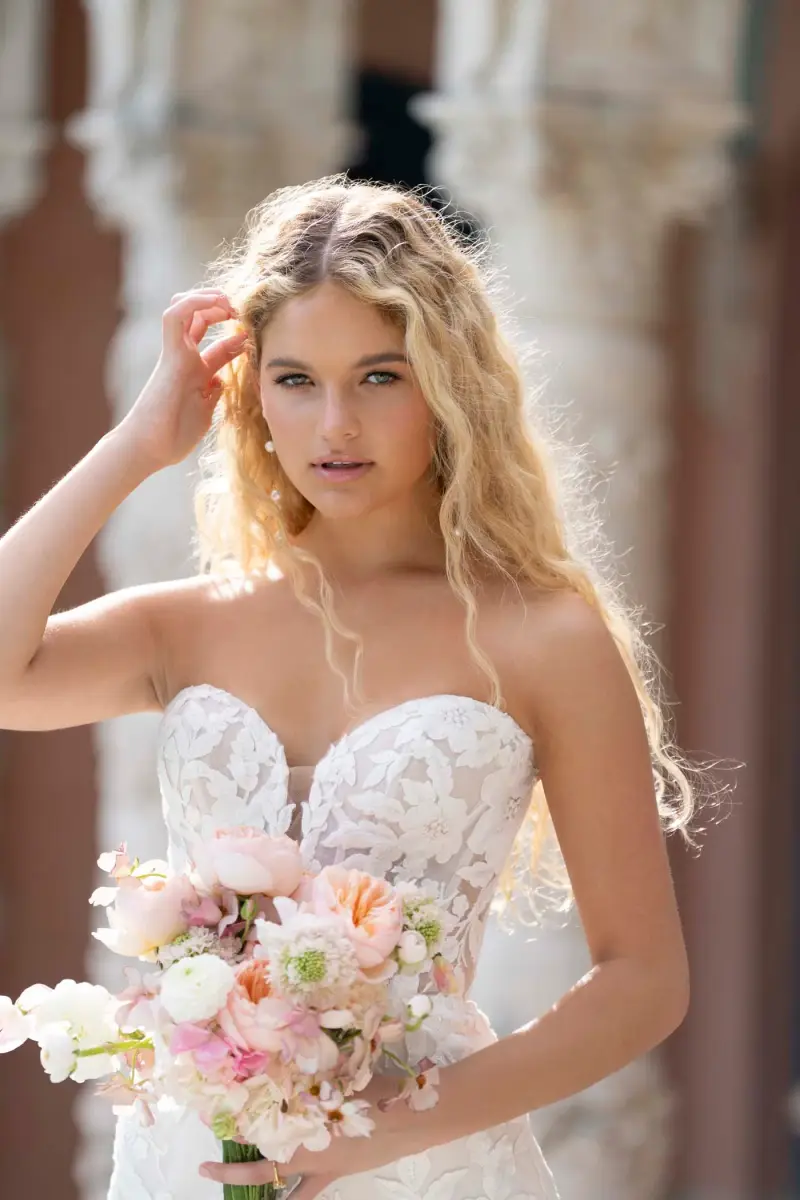
Bride in a strapless Abella gown with a floral appliqué lace bodice, holding a peach and blush bouquet
Abella, style R3854 Full length, front · one of the four
Bride standing in a garden in a fitted lace wedding gown, photographed from the front in daylight
The bride at the other store Has never seen your sample
Bride in a long-sleeved lace wedding gown standing among tall evergreen trees
A size somebody cannot fill The gap your rail happens to cover
How it works

How does a retired sample become a listing another store can find?

Four steps. Your team does the first three from the gown's own record in the catalogue, so nothing is retyped. RingUps does the fourth, and stops where the money starts.

  1. 01

    Flag the style and price it store to store

    A checkbox on the style form marks it eligible, and a second field holds the store-to-store price. That price is a separate field from your retail price and your sale price, deliberately, so what you would accept from another business never leaks into what a bride is quoted.

  2. 02

    Rate the condition and write the flaw note

    One of five tiers, chosen by a person. Below the two New tiers, a written disclosure is required and the listing will not go live without it. Vague self-description, rather than photograph count alone, is what turns into a not-as-described argument later.

  3. 03

    Add four photographs of this dress

    The primary image plus the gallery, counted at the moment another store asks to see the listing. Photographs of this actual unit, not the designer's product shot, because the designer's shot is a picture of a gown nobody has worn.

  4. 04

    Another store finds it and writes to you

    The enquiry lands with the sending store's name, the person who wrote it, and a snapshot of what was asked, so the record still reads correctly if the style is later renamed or repriced. Your answer is the record of what one business told another, and it cannot be edited afterwards.

Listing without naming your store

A store can list anonymously, and it reveals itself by answering

Stores that compete for the same brides do not want a rival watching which of their inventory is being cleared. So anonymity is a per-store setting, off unless you turn it on, and your listings show a generic label instead of your name. The label changes to your store only when you answer an enquiry, which is a deliberate action you take, never something the first message triggers.

The honest bit

The enquiring store's own name always shows to you from the first message. That asymmetry is the point: a competitor cannot unmask a store for the cost of one throwaway message asking whether something is still available. No design fully defeats a patient, determined unmasker. This raises the cost of casual probing, which is the behaviour that actually stops stores listing.

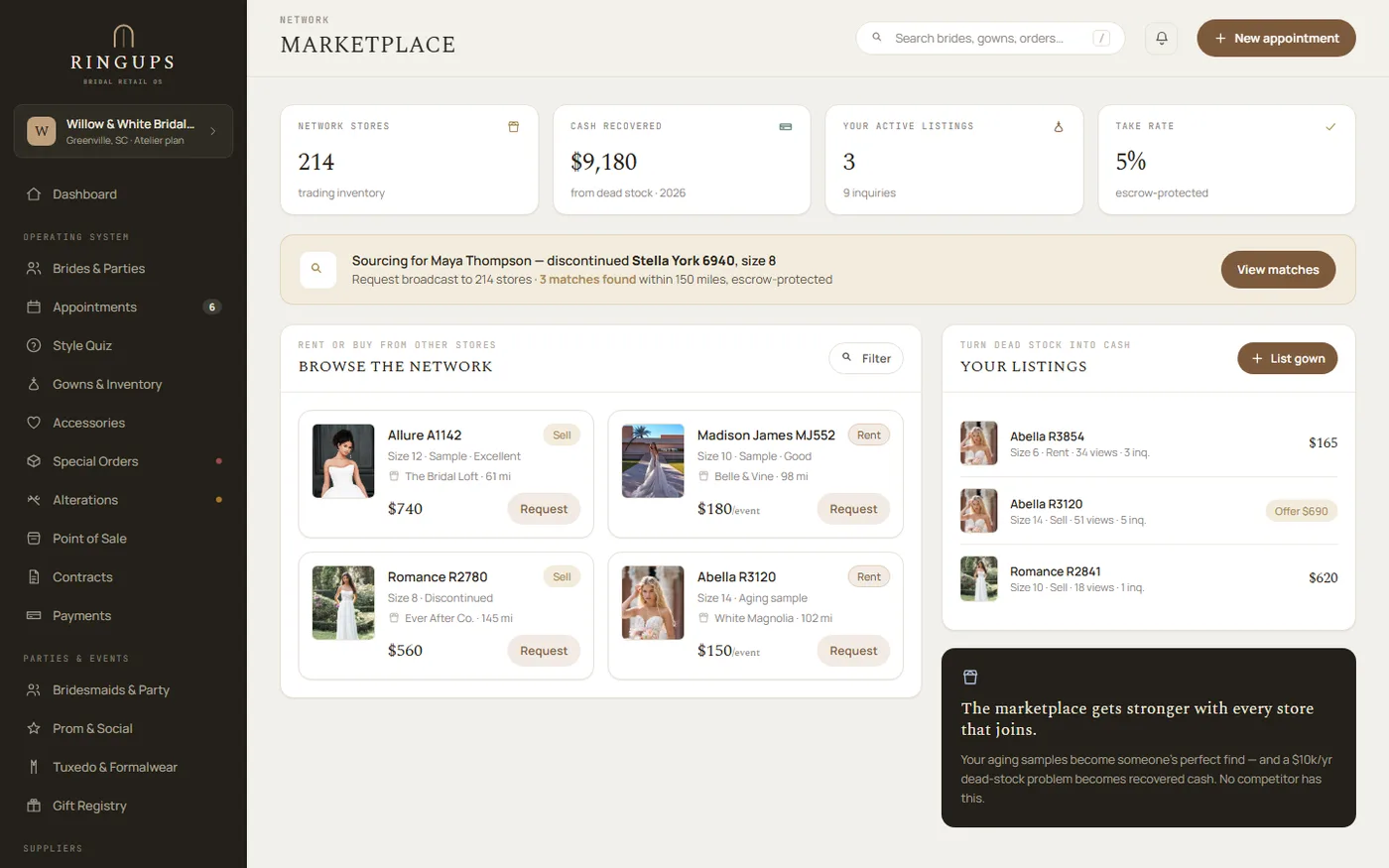
RingUps marketplace screen showing a gown listing with its condition tier, flaw note, photograph count and store-to-store price, and a second listing still in draft with the gate items it is missing
The marketplace listing screen, in the live RingUps product.
Proof

What does another store see when it looks at your listing?

This is the first feature in RingUps where one store is meant to see another store's records, which makes it the first place that rule could be got wrong in a way that leaks. Everywhere else in the database, a store reads its own rows and nothing else.

The easy implementation would have been a second read rule on the product table for anything flagged marketplace-eligible. That would have handed a competing store the whole row, including what your boutique paid the designer, your internal notes, how many of that style you have sold and when you last sold one. Those columns sit on the same record as the silhouette and the neckline.

So the cross-store read is a single function with an explicit, named column list, and nothing else can travel through it. Adding a column to your product records cannot widen what the marketplace exposes: somebody would have to open that function and add it by name. A designer you have flagged as private is nulled at the boundary as well, on the reasoning that another boutique is further outside the tent than a customer is.

Cande Bridal Boutique, the pilot store and a co-founder's business, gets no preferential treatment here. There is no per-store branch in that function. The pilot store's listings clear exactly the same photograph and condition gate as everybody else's, and when the gate shipped on 29 July 2026 the pilot store had zero marketplace-eligible styles, which is the honest reason this page is a waitlist and not a catalogue.

The cross-store boundary
FieldCrosses
Style number, colour, silhouette, neckline, fabric, sizesYes
Condition tier, flaw note, photographsYes
Store-to-store priceYes
Designer name, where the designer is flagged privateNo
What you paid for the gownNo
Your internal notes on the styleNo
Units sold, and the date you last sold oneNo

Migration 0112, verified against the RingUps production database, 4 August 2026.

Questions boutique owners ask about the marketplace

What are the five condition tiers on a RingUps marketplace listing?

New and never altered. New but altered or fitted as a sample. Excellent and professionally cleaned. Good with visible wear. As is, needs restoration. One tier is required before a listing becomes visible to another store, and the three tiers below the two New tiers also require a written flaw note.

Why does a marketplace listing need four photographs?

Because a sample tried on two hundred times is not the same product as one tried on twice, and one flattering photograph cannot tell the difference. Four photographs is the minimum a buying store needs to judge a gown it will never see in person. RingUps enforces the count in the database rather than in the form, so a listing that drops below four photographs leaves the marketplace instead of lingering.

How many stores are on the RingUps marketplace right now?

Two organisations exist in the database: the pilot store, Cande Bridal Boutique in Kelowna, British Columbia, and a labelled test fixture. There were zero marketplace-eligible styles when the photo and condition gate shipped on 29 July 2026. The listing machinery is built and the network is not open yet, which is why this page offers a waitlist rather than a catalogue.

Will another store see what I paid for a gown?

No. The cross-store read is a single database function that returns an explicit, named column list: style number, designer, colour, silhouette, neckline, fabric, sizes, the store-to-store price, condition, flaw note and photographs. It never returns your cost, your internal notes, your units sold or your last sold date. Adding a column to your product records cannot widen what the marketplace exposes, because a column has to be named in that function by hand.

Where to go next

Book a fifteen-minute demo on your own data

Bring the list of samples you have written off this year. We will show you the listing screen with your own gowns in it, and tell you plainly which stores are on the marketplace when you ask.

Get on the waitlist See every module